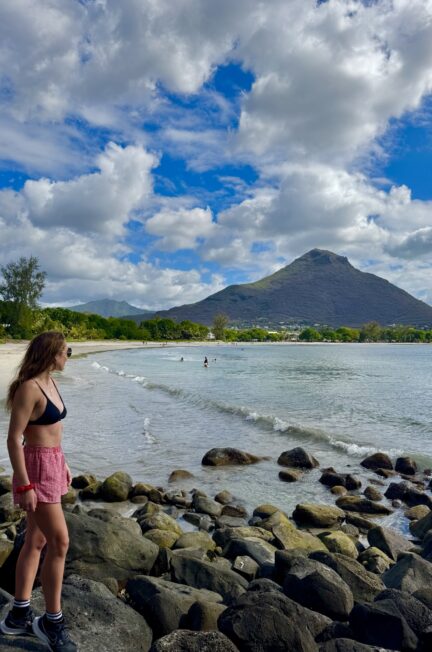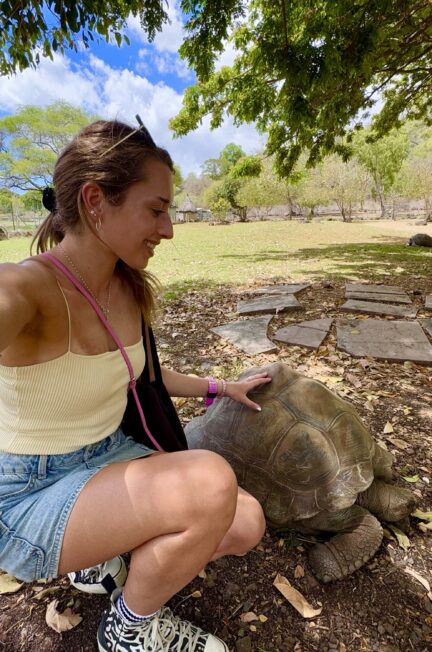
Key Things to Know Before Visiting Mauritius – Heading to Mauritius? Here’s What You Need to Know!
Mauritius is a dreamy island paradise in the Indian Ocean, and I absolutely loved my three-week visit! From pristine beaches and beautiful hikes, to boat trips, vibrant culture, and delicious street food – there’s so much to experience.
In this post, I’ve put together all the key things you need to know before visiting Mauritius, including entry requirements, getting around, accommodation, weather, and more. This guide will help you plan your trip and make the most of your time on the island.
- – Getting to Mauritius – Where is Mauritius?
- – Mauritius Entry Requirement – All-in-One Form
- – Currency
- – Language
- – How to Get Around Mauritius (Car Rental, Buses, Taxis & Tours)
- – Accommodation in Mauritius
- – Buying a SIM Card
- – Weather in Mauritius
- – Is There Much to Do in Mauritius Besides Go to the Beach?
- – Is Eating Cheap in Mauritius?
- – Where to Watch the Sunset in Mauritius?
– Getting to Mauritius – Where is Mauritius?
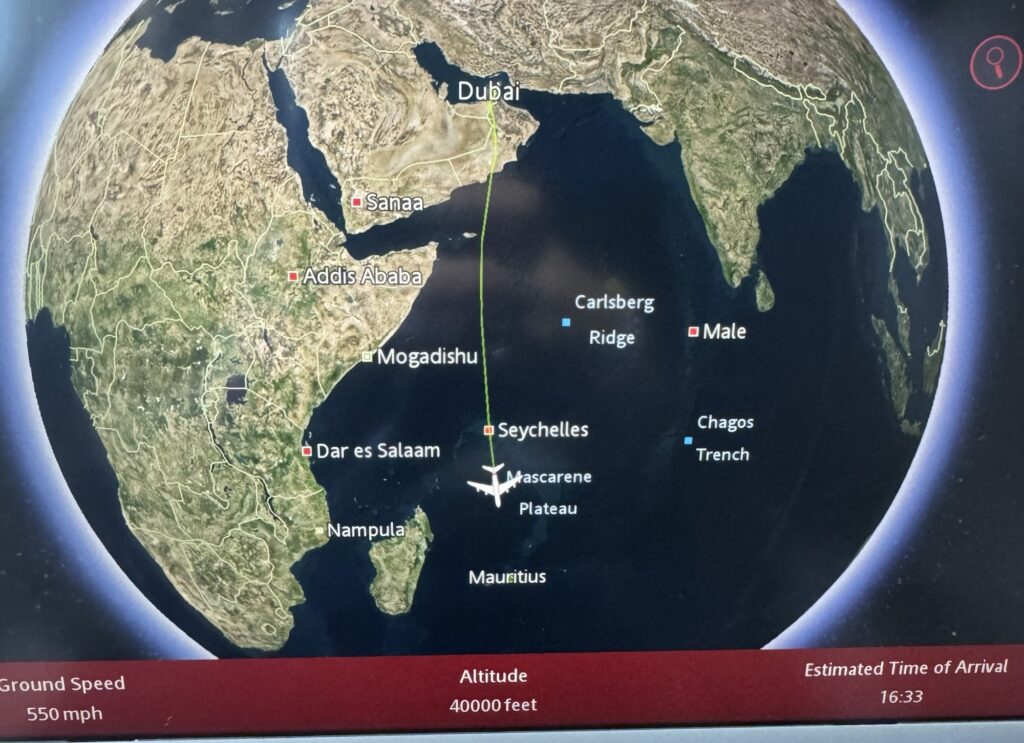
Located in the Indian Ocean, Mauritius may feel far from home – it’s pretty remote – but it’s well connected to major cities like London, Paris, Dubai, and Johannesburg. Its closest neighbours are the smaller islands of Réunion (a French overseas department, about a 50-minute flight away) and Rodrigues (belonging to Mauritius, roughly a 1.5-hour flight away). Together, these islands make up the Mascarene Islands.
Madagascar lies over 1,000 km to the west, and mainland Africa is roughly 1,700 km away. Because of this remoteness, reaching Mauritius usually requires at least one connecting flight. Direct flights are available from some destinations, though others only operate once or a few times per week, or may not run year-round.
For me, traveling from Edinburgh, Scotland, my options were flying via London, Paris, or Dubai. I ended up flying via Dubai with Emirates. This route split the journey nicely – neither leg was overly long – and I even got the chance for a brief stopover in Dubai on my return!
– Mauritius Entry Requirement – All-in-One Form
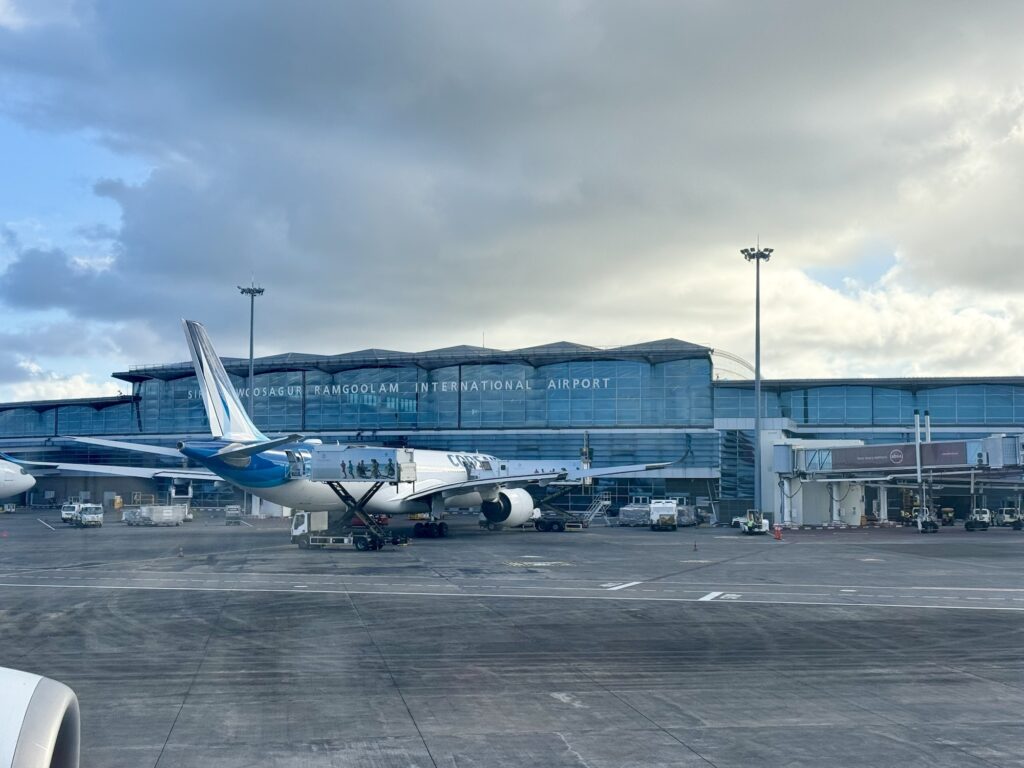
On arrival into Mauritius, every international passenger is required to provide immigration with the Mauritius All-in-One travel form. You can access this form online here.
You do need to enter your accommodation details on the form, so be sure you have organised your accommodation before completing it. If you’re staying with family/friends and not in a hotel/resort, ask them for their details and complete the form with their personal number/email address and the address where you will be staying.
Be sure to download/save/print screen the completed form so you have easy access to it. It does say to print the form, but don’t worry if you don’t have access to a printer. I didn’t, and showing it on my phone (as many others were also doing) was absolutely fine.
If you do forget to fill in the form before arriving at the airport in Mauritius, don’t stress. There is WiFi in the airport and you can fill it in while you wait in the queue at border control.
Be sure to also check any visa requirements for your entry to the country. Many countries are granted a visa on arrival, which means you don’t need to do anything before arriving except the travel form. Hopefully you’re coming from one of those countries as I was (the UK)!
– Currency
The currency of Mauritius is the Mauritian Rupee.
While most places accept card, it’s best to always have some cash in case you need it.
Money can be exchanged at the airport on arrival, or you can take money out using an ATM machine whether in the airport or in the town you are staying (provided there is an ATM there!). I personally just waited until I was in my destination of Flic en Flac and used the ATM there.
- There does tend to be a transaction fee (plus if your bank charges you), so I recommend to take out a reasonable amount at once to avoid losing more money.
If you purchase from Duty Free at the airport whether on arrival or departure, you can pay with euros (some other airport stores may also accept euros).
– Language
English is the official language of Mauritius. However, the country really has 3 main languages – English, French and Mauritian Creole.
I found that French seems to be more commonly spoken than English, for example if you go into a store or supermarket they are likely to greet you in French!
– How to Get Around Mauritius (Car Rental, Buses, Taxis & Tours)
Mauritius may look small, but getting around can be surprisingly time-consuming (especially if you rely on public transport). Here are the best ways to explore the island, depending on your travel style and budget.
Renting a Car in Mauritius:
In my opinion, the best way to explore Mauritius is by car. Driving gives you total freedom – you can stop at hidden beaches, local eateries, or scenic viewpoints whenever you want.
In Mauritius, you drive on the left-hand side of the road. The island is pretty small, so you can easily explore by car and cover a lot in a day (while not being restricted to the bus routes or timetables). Do note however that the roads can’t keep up with the volume of traffic – it generally takes a lot longer than it should (distance-wise) to travel around even by car.
You can pick up a rental car directly at the airport, or in popular areas such as Flic en Flac, Grand Baie, and Balaclava. Cars from the towns can sell out quickly, especially in high season, so I recommend booking in advance online.
✨I recommend checking for the best car hire deals (with free cancellation) on Rentalcars and Discover Cars.
Airport Transfer: If you’re renting a car from the airport, your transport is sorted. Otherwise, hotels often provide transfers, or you can pre-book a transfer through Welcome Pickups to know your fare in advance.
Even if you don’t plan to drive the whole trip, renting a car for a few days is worth it to explore remote spots at your own pace.
Renting a Scooter:
If you prefer two wheels to four wheels, scooters are another popular way to get around, especially for solo travellers or couples. You’ll need a valid driver’s license, and helmets are mandatory. Scooters can be rented in most tourist towns.
Taking the Public Bus in Mauritius:
As for the public buses in Mauritius, I wouldn’t rely on them as your sole transport option to explore as much as possible. I tried to travel around this way and it didn’t work out so well.
- For example one day I tried to take a bus to Chamarel, in the end I gave up as I kept being told to wait on a different bus, and eventually just hopped on a bus to Port Louis instead!
Moreover, buses don’t quite reach some of the spots you might want to go to. Such as if you want to visit the beaches of Le Morne, or hike Le Morne mountain, you will have to walk some kms from the bus stop (on roads that aren’t really the best for walking on at times). Another example, if you want to travel from say the west coast to the east coast by bus for the day, it would take a while and require 2/3 buses and frankly it’s just not that doable!
So while the buses are cheap and definitely work for some journeys, such as going from Flic en Flac to Port Louis, (there are many buses heading that way), they are not the best to navigate or see the island on a whole as a tourist. Google maps doesn’t tell you what bus to take by the way!
Do also not that buses do not run late in the evening – try to take a bus back before 6pm if you do travel this way.
Taxis, Private Drivers & Guided Tours in Mauritius:
Taxis are easy to find across Mauritius – around main towns, hotels, resorts, and popular attractions. They’re perfect for shorter distance, otherwise costs can add up quickly if you use them every day (and for longer journeys).
For sightseeing days, you can also hire a private driver for the day. This option often includes a licensed guide and is surprisingly affordable when split between two or more people. There are some excellent private tour options available on GetYourGuide, you can check them out here.
If you want a stress-free way to get from the airport to your hotel, I recommend pre-booking an airport transfer – you’ll know the exact price and have a driver waiting for you on arrival. You can check rates and book your transfer here.
Private Drivers & Guided Island Tours:
A private driver or guided tour (these often come hand-in-hand), is one of the easiest and most relaxing ways to see Mauritius. These experiences typically include:
- hotel pickup and drop-off
- air-conditioned vehicle
- a friendly, licensed driver-guide
- time at the island’s top attractions
While most tours follow set itineraries, they still feel personal, and your guide will likely be happy to adjust stops depending on your interests or the weather.
Here are a few top-rated options on GetYourGuide:
- 🌴Private Island Tour with Chauffeur & Guide – An excellent choice for a custom tour. Choose from a 4 or 8-hour itinerary, with the freedom to pick where you wish to go depending on your interests. See more & book here
- 🌋Private Southwest Chamarel Highlights Tour – A fantastic option for visiting popular sites such as Chamarel (the Seven Coloured Earth) and Black River Gorges. Check availability & book here
- 🌺Mauritius Private North tour – Highlights include exploring Port Louis, Pamplemousses Botanical Gardens, and the Sugar Museum. Get details & book here
- 🏖️Private Full Day Tour of the North Coast – A 7-hour tour visiting the island’s most beautiful northern beaches and main attractions. See info & reserve here
You can read recent reviews and book in advance online (always a good idea if travelling in busier months!). Check out top-rated tours on GetYourGuide here.
Tips for Choosing Tours:
- Split the cost with friends or family – private tours become surprisingly affordable when shared.
- Check what’s included: some tours include entrance fees to certain attractions, for example, others don’t.
- Book in advance for popular tours, especially during peak season (November–April). You can book tours here.
– Accommodation in Mauritius
Accommodation options in Mauritius range from reasonably priced hotels/guesthouses (starting from around £30 a night), to more high end luxury resorts.
For the solo (budget) travellers, there are no hostels in Mauritius. But you can have your own space in a hotel or guesthouse for the same as you would pay in some hostels in Europe, for example (even cheaper than some of Europe’s summer hostel prices!).
- So accommodation in Mauritius can be pretty affordable (but of course the flights are expensive!).
For the best range of, and deals on, accommodation in Mauritius, I recommend checking out Booking.com and/or Agoda.
– Buying a SIM Card
I do recommend to get a sim card for your stay on the island. It’s always better to be safe and stay connected especially in case of an emergency. So, before visiting, a key thing to know is how and where to get a SIM card for Mauritius.
The main networks in Mauritius are Telecom and Emtel.
Mauritius offers a tourist SIM plan:
The tourist SIM is the same price on both of these networks, and offers the same package: 200 GB data, unlimited local SMS and airtime of Rs.200. A month is the minimum amount of time you can pay for, which costs Rs.750. That’s a pretty decent price especially considering the generous data allowance, so it’s worth it even if you’re just visiting Mauritius for a week.
Tourist SIM cards are available as physical SIMs or eSIMS. In order to get one, you need to supply the provider with your personal details, passport, for example, and proof of address in Mauritius. I was staying with a friend so was a little concerned about how I was going to do that, but they let me use my ALL IN ONE travel form as proof.
It’s therefore important to note that you can’t just go into any supermarket, for example, like in the UK and purchase a SIM. The most convenient option, then, is to get a SIM from the airport, from either the Telecom or Emtel outlet. You can actually pre-order one and collect it on arrival!
If, however, you bypass this as I did, you can get a SIM from any Telecom or Emtel store across the country, but there aren’t that many around! For me, I ended up at the Telecom store in Cascavelle (I was staying in Flic en Flac).
You can buy a SIM from some convenience stores, but not all. In Flic en Flac there was one convenience store with this option (the store next to the bakery), but I headed to Cascavelle as I trusted the official store a little more (seeing as you have to give over your passport etc).
If you don’t wish to have to deal with getting a SIM on arrival, you can set up an eSIM before arriving. This will cost a little more as you won’t get the tourist plan offer mentioned above, but you can take a look at Airalo’s eSIMs, for example, and see if they have a plan to suit you!
– Weather in Mauritius
Mauritius is a tropical island paradise, meaning warm days all year round! The seasons are flipped for those of us coming from the northern hemisphere – winter in summer, summer in winter. November to April is summer, while June to September is winter. Even in winter, it’s warm, with temperatures averaging around 20-25°C. Summer sees slightly higher temperatures up to around 31°C, with higher humidity levels.
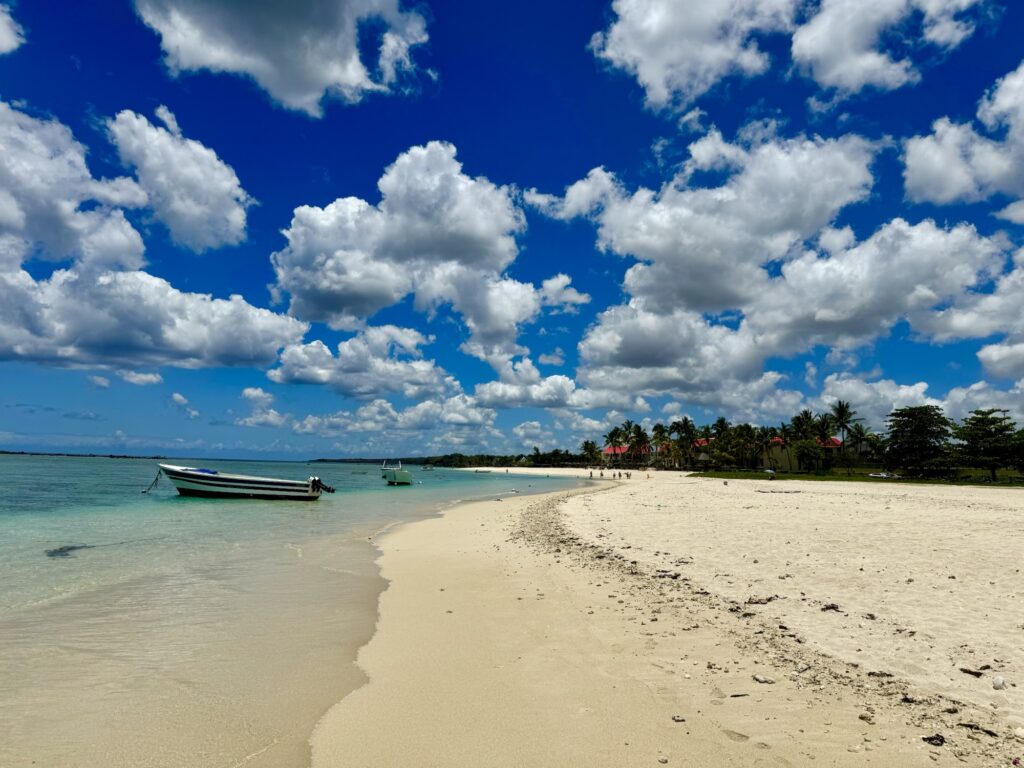
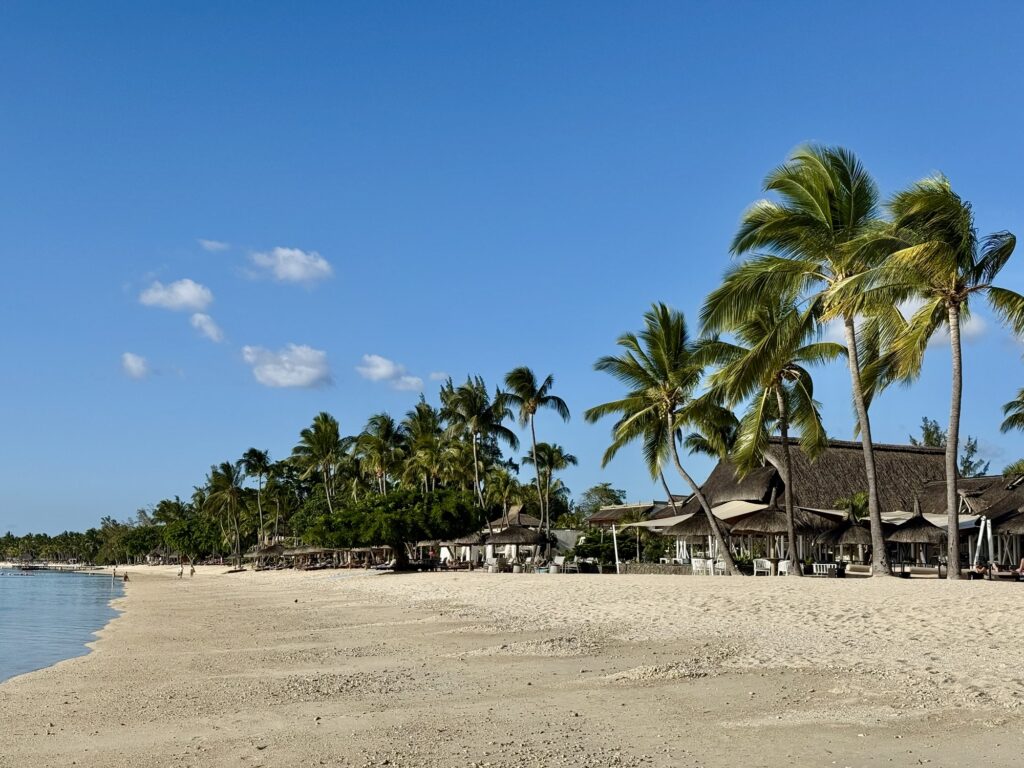
Remember the mention of the word ‘tropical’. The island does have a rainy season. This occurs from around December to March. Cyclone season is also at this time, but the island generally misses the eye of most cyclones. Don’t let rainy/cyclone season put you off too much, many people don’t!
The west coast is typically drier, whereas the east coast tends to get the worst of the wet weather.
- I visited Mauritius in November-December and the weather was pretty great (although hot and humid of course!). Hopefully you will be just as lucky!
- I stayed in Flic en Flac (west coast), which I can confirm did seem to be more sheltered from rain. There were a few heavy rain showers, which soon dried up and turned into bright skies.
- While the weather I kept checking before arriving often said rain for Flic en Flac, this proved to be very wrong. Honestly I gave up checking the weather apps, at least for the west coast – don’t trust them!
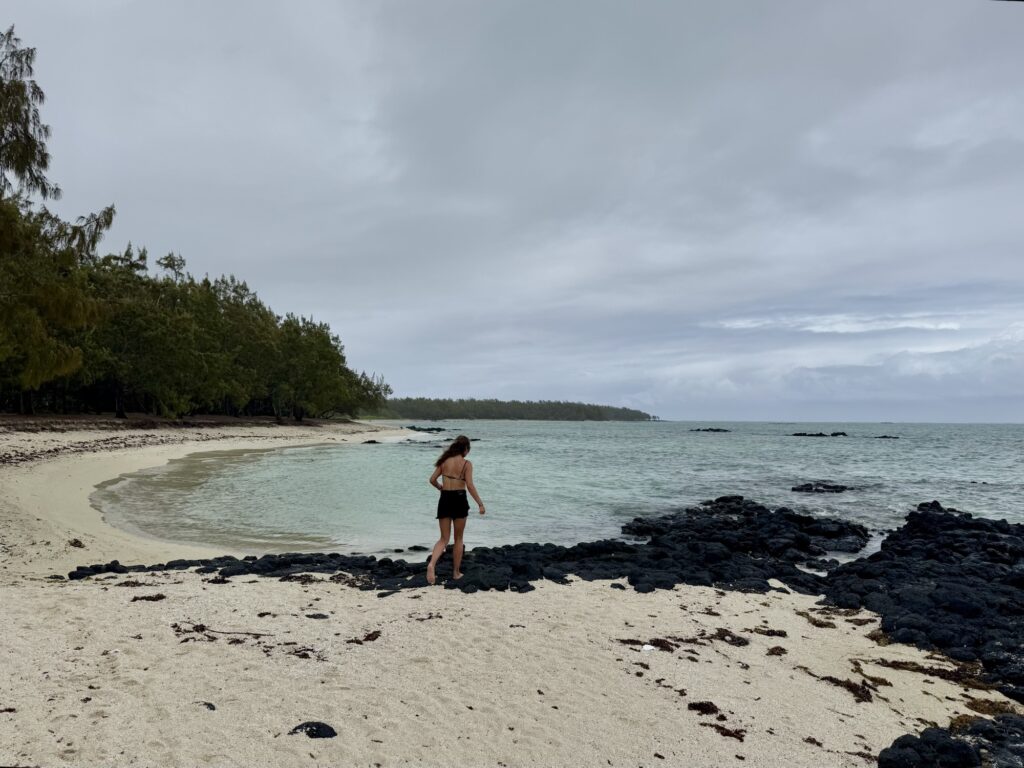
Where I did go wrong, however, was not checking the weather for the east coast.. The worst weather day during my three week stay was on a day trip to the east coast for a boat trip to Ile aux Cerfs. It rained/remained overcast for the day (until making it back to the west!!). So maybe it was just bad timing, or maybe it confirmed weather on the west is best!
– Is There Much to Do in Mauritius Besides Go to the Beach?
Thinking about visiting Mauritius but wondering if you’ll get bored just lazing on the beach every day? Don’t fret, there is plenty to see and do on the island that you will leave wishing you had more time!
Mauritius has some great mountains that area well worth climbing as well as national parks worth exploring. So hiking is on the cards!! If you intend to do a lot of hiking however, I would recommend visiting during the ‘cooler’ months – try to avoid December, January, February. While I did hike during my visit in December, it was HOT and humid. Had it been cooler I would have had more hiking days!
Water activities are also aplenty: boat trips, swimming with dolphins, snorkeling, diving, kayaking, surfing, windsurfing, parasailing, etc.
There are also attractions such as the Sir Seewoosagur Ramgoolam Botanical Garden, Chamarel Seven Colored Earth Geopark, Casela Nature Park to name a few!
If you want more adrenaline pumping activities, options include helicopter tours, quad biking, abseiling.
– Is Eating Cheap in Mauritius?
In order to eat on a budget, street food is the go-to. But in fact, you need to eat some Mauritian street food whether on a budget or not!! Street food in Mauritius is highly rated, it is also easy to come by.
In Flic-en-Flac, for example, there are street food vendors on the beach. This is great for lunch as you can get your food then go and find a spot on the beach to enjoy it! Or in the likes of Mont-Choisy, there are street food vendors with tables and chairs set out looking out to the beach – who needs an official restaurant?!
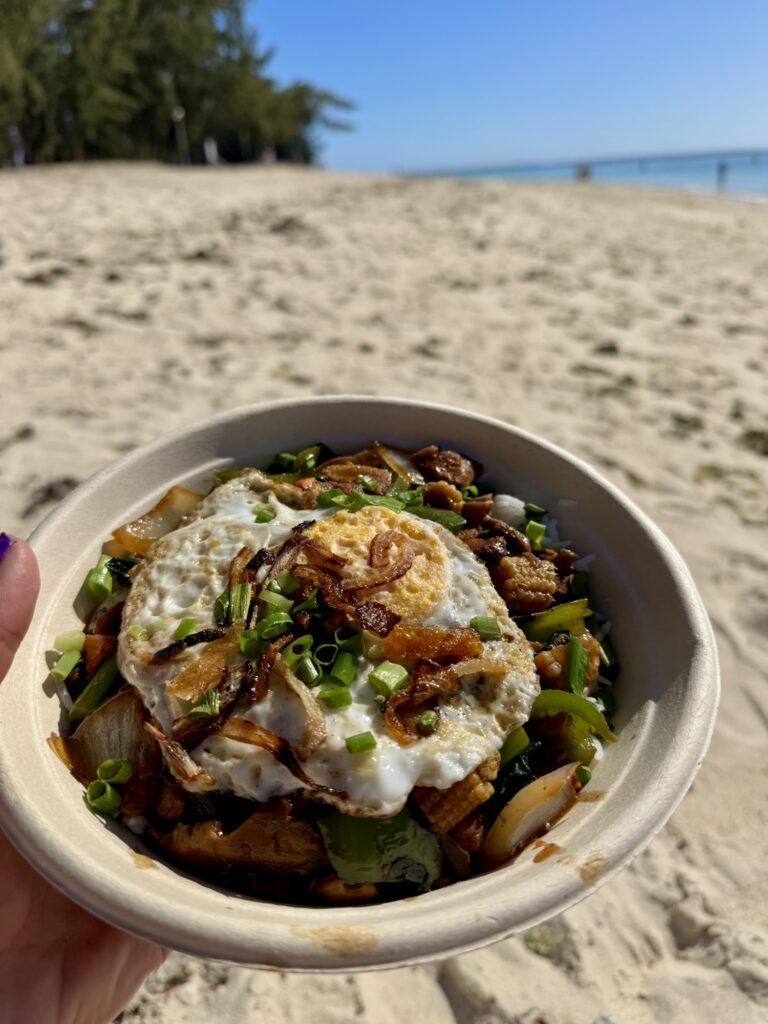
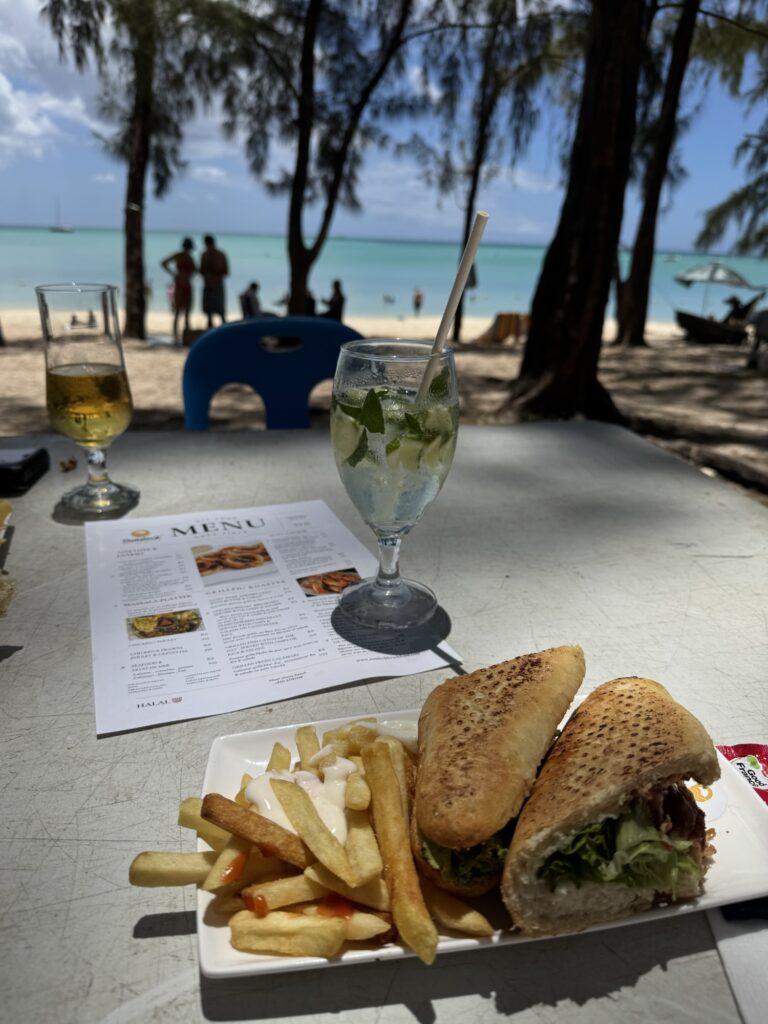
Talking of restaurants, these are pretty standard priced. A pizza for example would be around £10 – quite similar prices to the likes of the UK. A nice breakfast spot in Flic en Flac I went to was around Rs. 500 (around £9) for a pastry, yoghurt, full English breakfast, juice, tea/coffee. Not super cheap but not too bad! So, you can eat out in restaurants/nice cafés without breaking the bank. However, depending on your budget you probably don’t want to for every meal!!
– Where to Watch the Sunset in Mauritius?
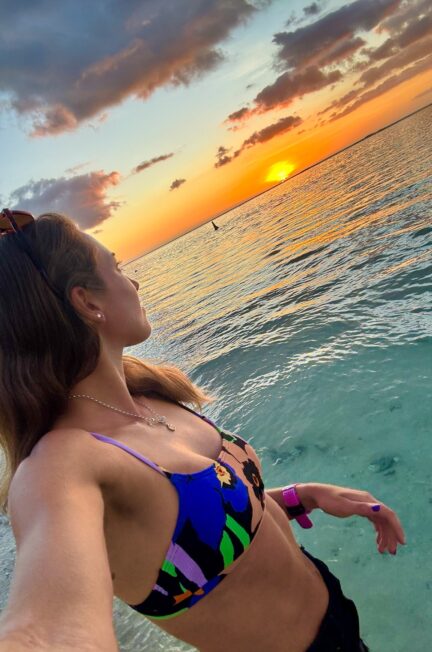
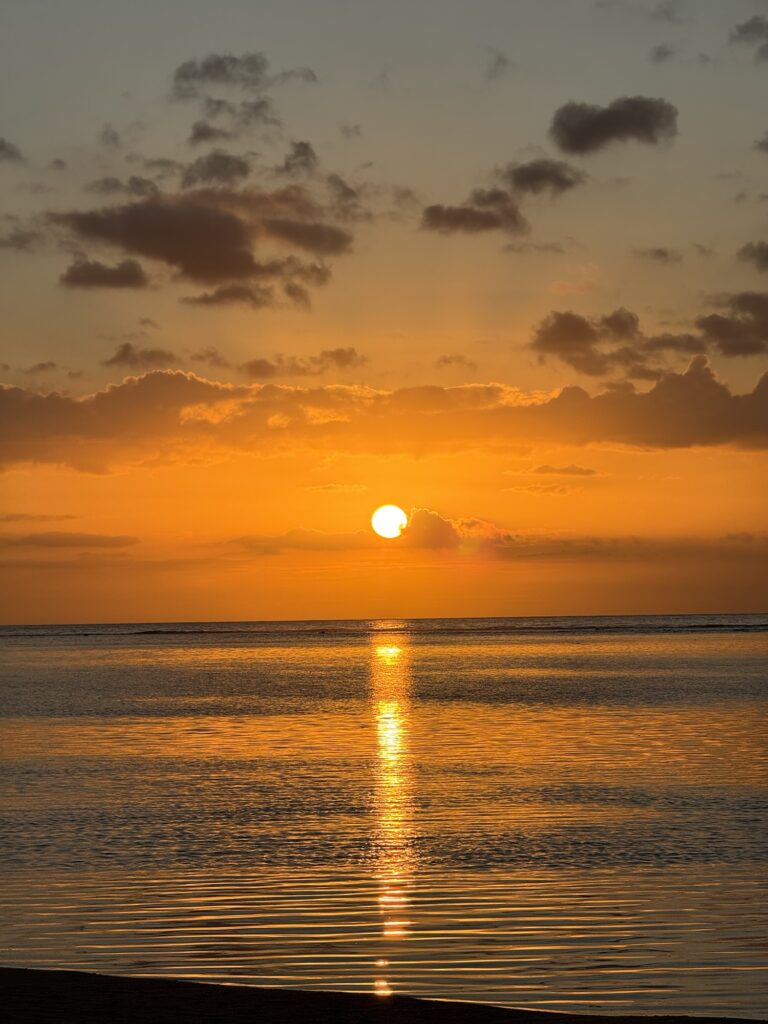
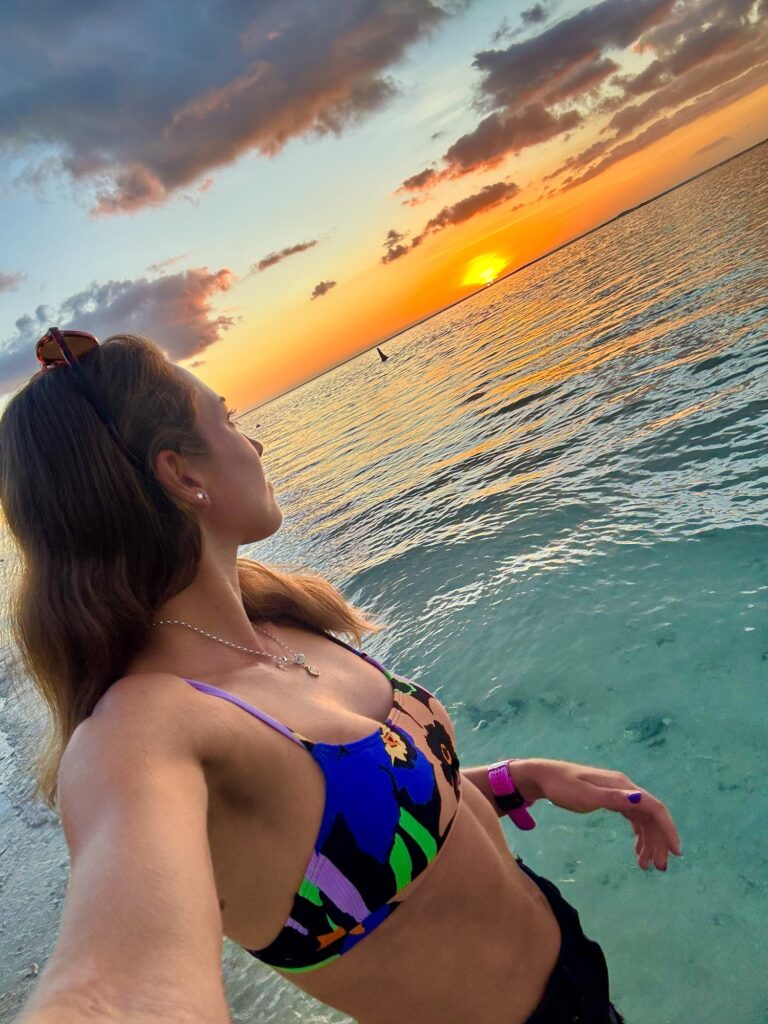
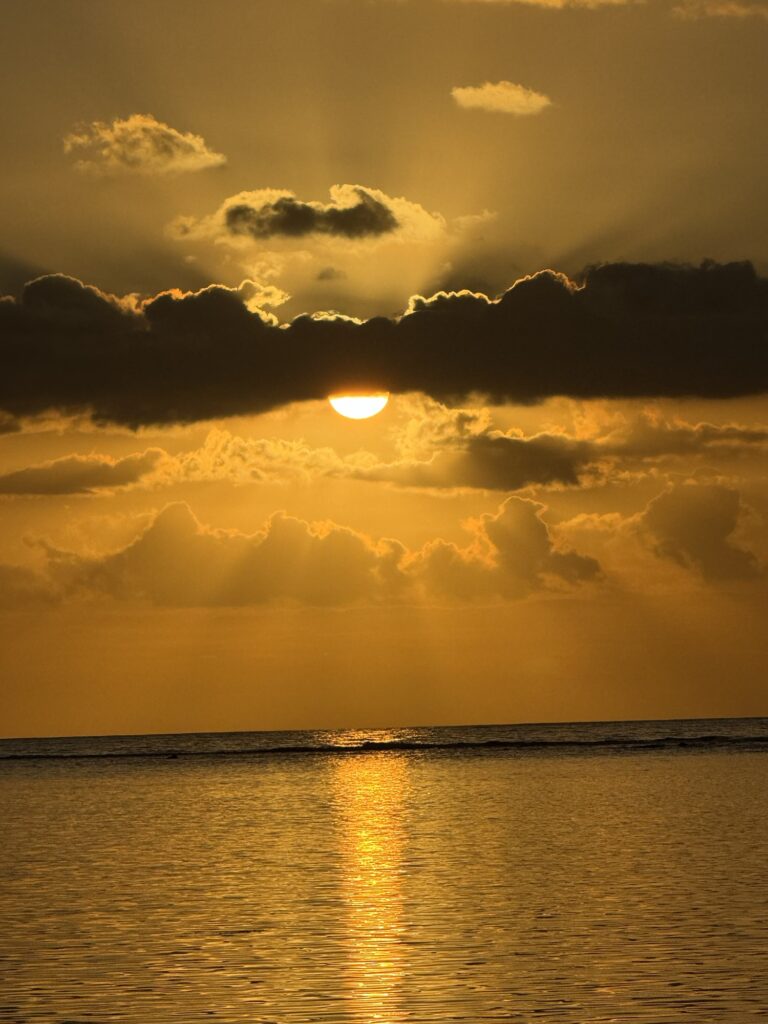
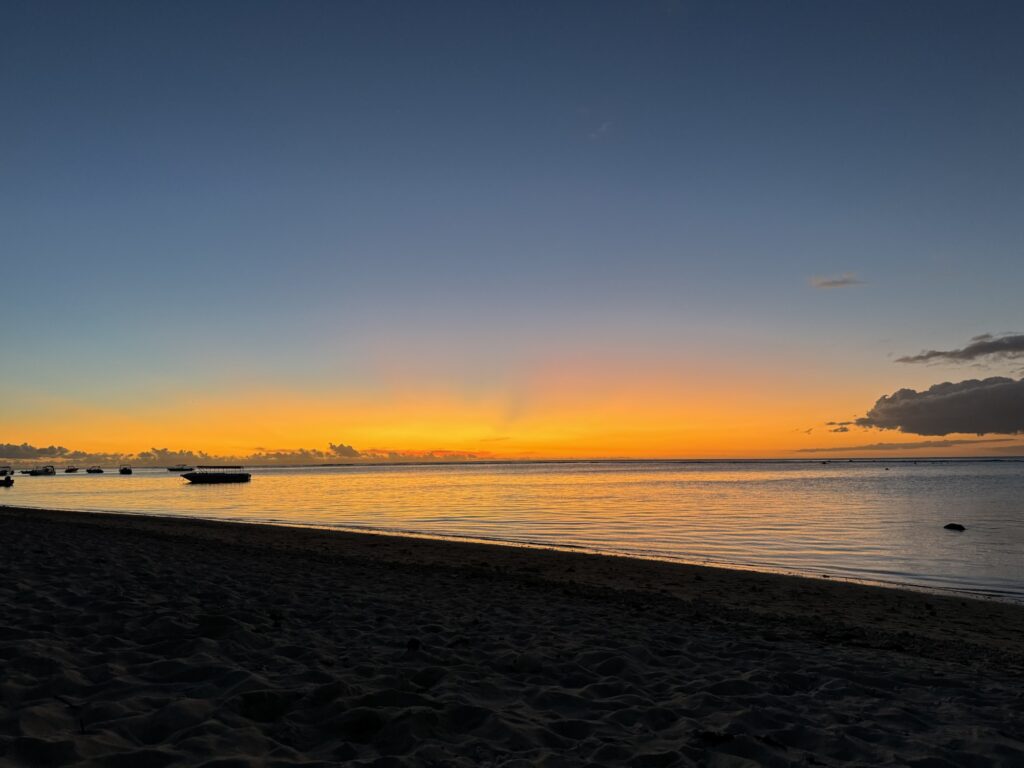
Mauritian sunsets are stunning!! Therefore another key things to know is where to watch the sunset while visiting Mauritius!
For the best sunsets in Mauritius, you want to be on the west coast.
- In particular, watching the sunset from Flic en Flac beach is something you don’t want to miss! It’s a scene you just can’t get tired of!
For more ideas of what to do in Mauritius, you can check out my posts: